Product Overview
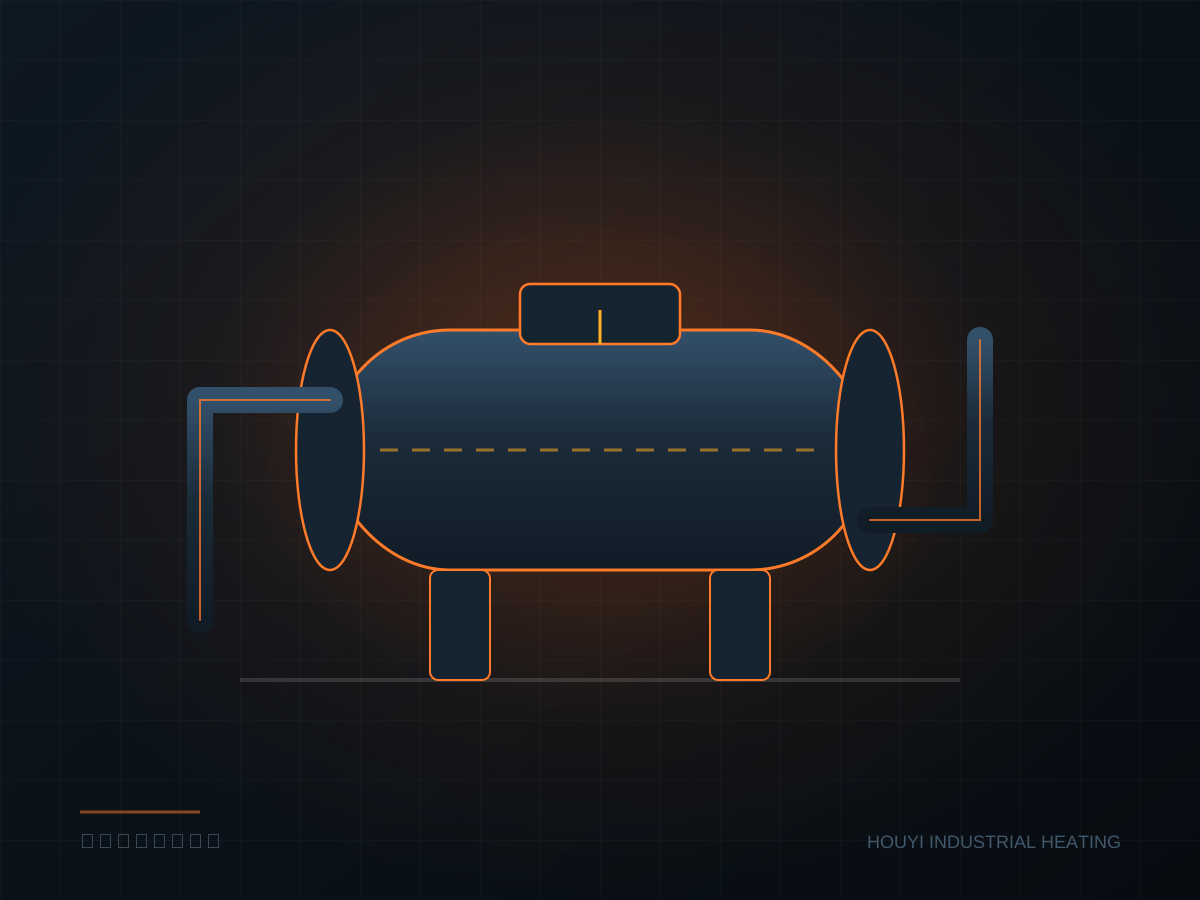
The HYC series is a complete inline heating unit: carbon-steel or stainless-steel vessel, built-in immersion bundle, inlet/outlet nozzles, vent and drain ports, and temperature-control and protection circuits—hydrotested and electrically tested before shipment. Medium enters at the bottom, passes the baffles, and exits at the top; flow velocity and residence time are calculated to avoid local flashing.
The vessel is designed for 1.6 MPa or 2.5 MPa, with nozzle sizes from DN25 to DN150 and flange, threaded, or tri-clamp connections. Heating power is calculated from flow rate, inlet/outlet differential temperature, and specific heat, with a 15%–20% margin to cover winter conditions or flow fluctuations.
Control options include mechanical thermostats, PID instruments, or SCR power regulation. SCR continuous control markedly reduces inrush current—important where grid capacity is limited. A series flow or differential-pressure switch cuts heating on flow loss to prevent dry firing. The unit can be insulated with a stainless-steel jacket keeping surface temperature below 60°C.
Construction Features
- Vessel, bundle, and controls integrated—connect piping and power on site and run
- Built-in baffles ensure proper flow path, avoiding local overheating and flashing
- Optional SCR continuous control for smooth inrush current
- Flow or differential-pressure switch interlock cuts power on flow loss
- Insulation with stainless-steel jacket, surface temperature ≤60°C
- Explosion-proof terminal chamber and control cabinet available for hazardous areas
Technical Specifications
| Rated Power | 6 – 300 kW |
|---|---|
| Rated Voltage | 380V / 415V, 3-phase 4-wire |
| Vessel Material | Carbon steel (anti-corrosion coating) / 304 / 316L |
| Nozzle Size | DN25 – DN150 |
| Design Pressure | 1.6 MPa / 2.5 MPa |
| Outlet Temperature | Up to 350°C (thermal-oil service) |
| Control Accuracy | ±1°C (PID + SCR) |
| Protection | Over-temperature, flow loss, phase loss, short circuit, ground fault |
The table lists typical configuration ranges. Special pressure, temperature or media conditions require re-checking; final parameters are confirmed by the approved drawings and technical agreement.
Typical Applications
- Thermal-oil circulation heating
- Inline heating of process water and cleaning fluids
- Thermal-oil boiler replacement
- Secondary side of district heating
- Chemical pipeline heating
Information Needed for Selection
- Medium name, concentration, and whether it contains particles
- Total medium volume or circulation flow rate
- Initial and target temperature
- Required heat-up time
- Vessel or pipe size and material
- Supply voltage, phases, and available capacity
- Installation environment and hazardous-area requirements
- Connection standard and mounting orientation