Product Overview
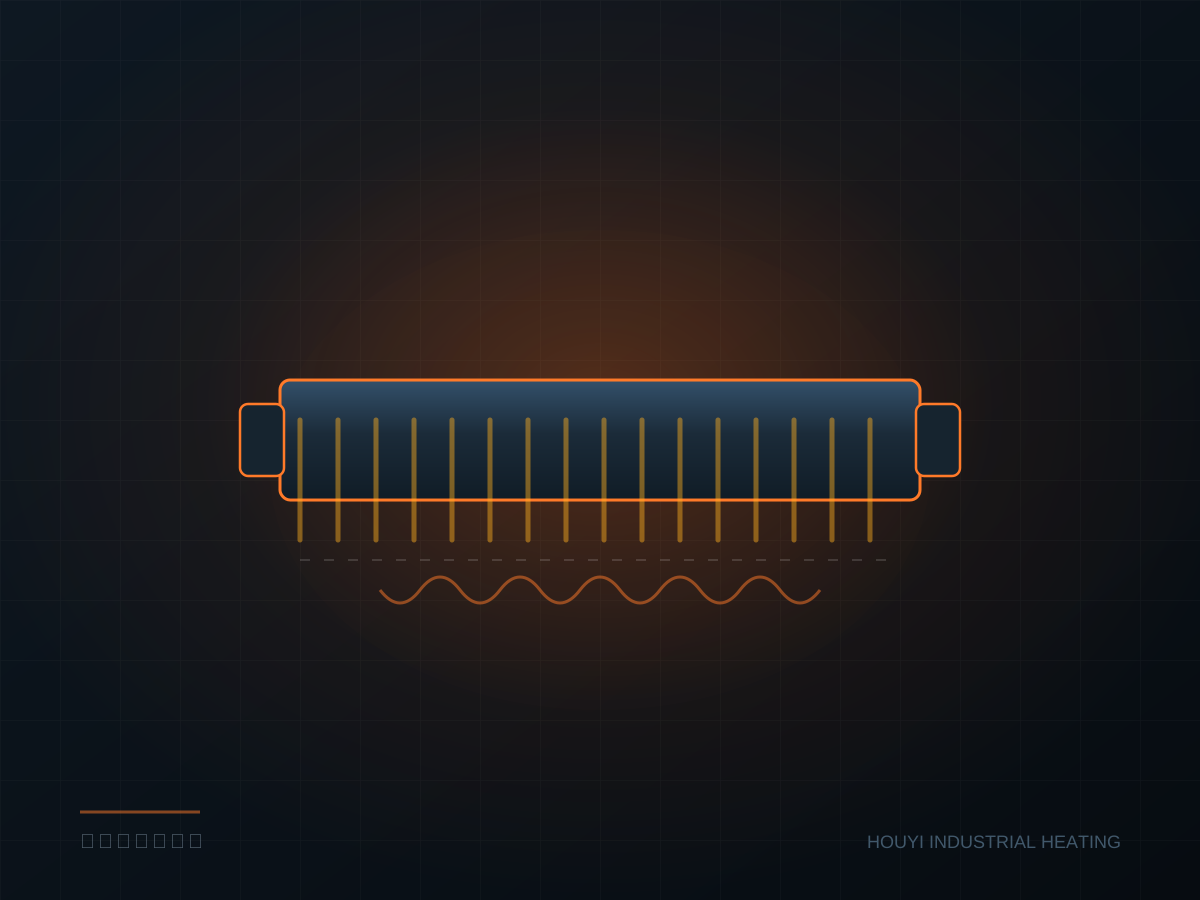
A strip heater is itself a flat rectangular element: resistance wire wound on a mica frame, covered by mica sheets, and sheathed in stainless steel or galvanized steel. Adding fins increases the air-side area, lowering surface temperature and extending life.
Mount both ends to the duct sidewall or oven wall, keeping enough spacing between elements for airflow through the fins. Recommended velocity is 4–8 m/s—too low piles up heat, too high raises pressure drop. Multiple elements are grouped in delta or star and brought to a common terminal box.
These elements are simple and low-cost, ideal as standard fit for ovens, drying boxes, and hot-air blowers. The drawback is modest power density; high-power needs many elements and space, in which case use finned tubes or a duct heater.
Construction Features
- Strip with fins, air-side area up over 3×
- Thin profile mounts directly to oven wall or duct side panel
- 0.3 – 6 kW each, combine for high power
- Stainless-steel shell, up to 450°C
- External terminals; replace one without disturbing others
- Low cost, ideal standard oven configuration
Technical Specifications
| Single Power | 0.3 – 6 kW |
|---|---|
| Rated Voltage | 220V / 380V |
| Dimensions | Length 300 – 1200 mm, width 60 – 200 mm |
| Max Temperature | 450°C |
| Shell Material | 304 stainless steel / galvanized steel |
| Fin Height | 12 – 25 mm |
| Air Velocity | 4 – 8 m/s |
| Insulation Resistance | ≥ 100 MΩ |
The table lists typical configuration ranges. Special pressure, temperature or media conditions require re-checking; final parameters are confirmed by the approved drawings and technical agreement.
Typical Applications
- Ovens and drying boxes
- Hot-air and warm-air blowers
- Duct auxiliary heating
- Paint curing
- Food ovens
Information Needed for Selection
- Medium name, concentration, and whether it contains particles
- Total medium volume or circulation flow rate
- Initial and target temperature
- Required heat-up time
- Vessel or pipe size and material
- Supply voltage, phases, and available capacity
- Installation environment and hazardous-area requirements
- Connection standard and mounting orientation