Technical Article
Why Thermal Oil Systems Coke: Flow Velocity, Film Temperature and Oil Quality
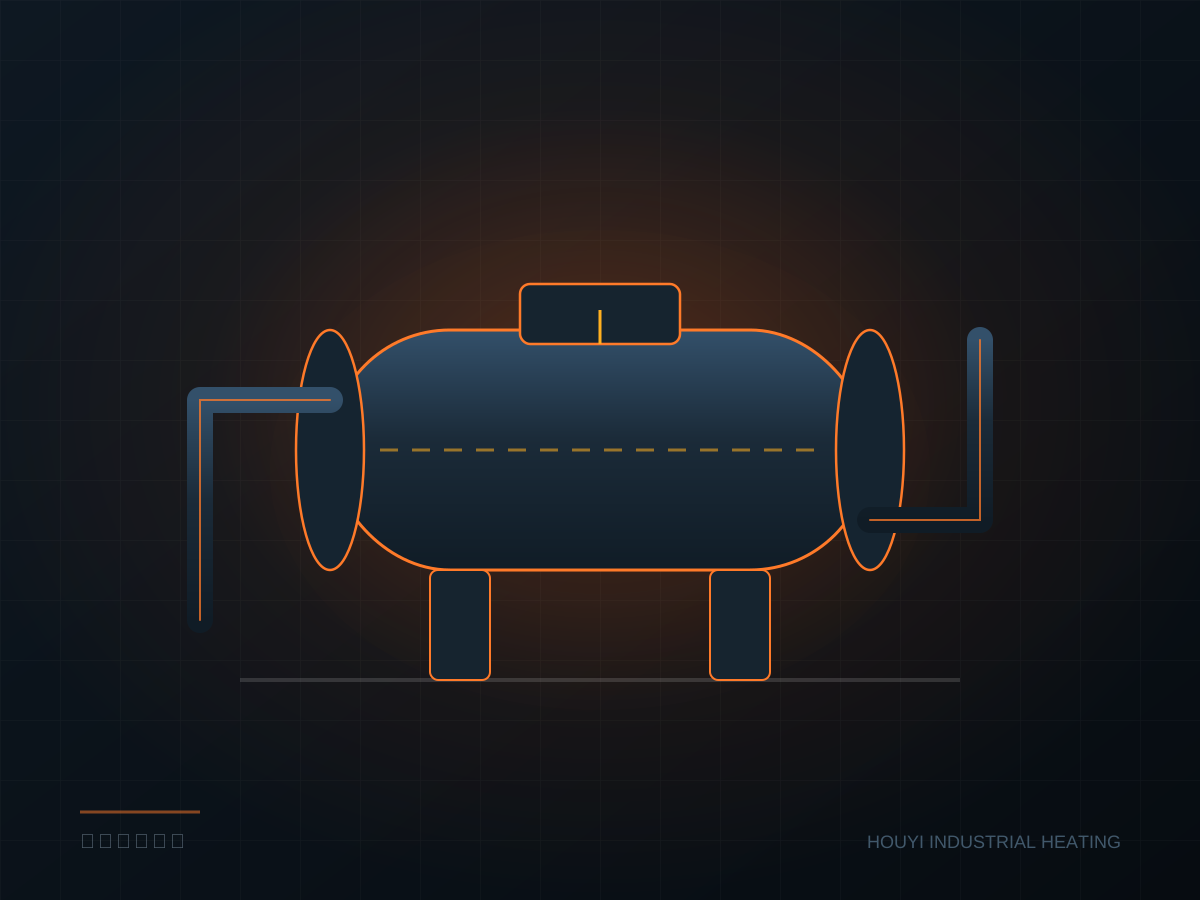
Thermal oil coking is essentially cracking and polymerization of the oil at high temperature. Cracking produces low-boilers; polymerization produces high-boilers and coke. For every 10°C rise, the cracking rate roughly doubles — so "just a little over spec" is expensive over long operation.
Film temperature is the key indicator
In a circulating system the bulk oil temperature may be 280°C, but the boundary layer near the tube wall is much hotter. This boundary-layer temperature is the film temperature, equal to the bulk temperature plus heat flux times boundary-layer thermal resistance.
Once film temperature exceeds the oil's allowable limit, the layer of oil against the wall begins to coke. The coke layer has poor conductivity, which raises wall temperature further — a positive feedback loop. Many systems go from "slower heat-up" to "completely blocked" in just a few months.
Why flow velocity matters
Higher velocity thins the boundary layer and lowers film temperature. The recommended velocity for thermal oil systems is 1.5–2.5 m/s; below 1 m/s the boundary layer thickens markedly.
There are several common causes of low velocity in practice: an undersized pump, too many elbows, a clogged filter, and an over-open bypass valve. The last is the most subtle — to trim outlet temperature, the site often opens the bypass half way, leaving the main loop at only half design flow.
Surface load sets the heat flux
The higher the element surface load, the higher the film temperature at the same velocity. For thermal oil, keep surface load at 2–3 W/cm² — do not use the 6–8 W/cm² of a hot-water system.
High-power units should use many elements distributed apart, not a few high-power elements clustered together. The former gives low heat flux and good oil turbulence; the latter creates a local hot zone near the elements.
Oil does not last forever
Mineral thermal oil has a normal service life of 3–5 years; synthetic oil can reach 8–10 years, provided operating conditions are normal. Judge oil condition by three indicators: carbon residue, acid number and kinematic viscosity. When carbon residue exceeds 1.5% or acid number exceeds 0.5 mgKOH/g, consider an oil change or partial top-up.
Adding fresh oil is not a universal fix. Peroxides in the old oil accelerate aging of the new oil; if carbon residue is already high, it is best to replace the whole charge and clean the system.
Some system design habits
- Size the expansion tank at 1.2× the system oil charge, mounted above the highest system point
- Keep the expansion tank below 70°C to avoid hot oil oxidizing in contact with air
- Fit a temperature point at the heater outlet and flow or differential-pressure monitoring on the return line
- On shutdown, stop heating first and let the circulation pump run 15–30 minutes more to carry away residual heat
- Before commissioning a new system, boil off and vent the oil, ramping in stages to 120°C to remove moisture
Coking is not the heater's problem alone, nor can it be fully solved by changing equipment. Manage velocity, film temperature and oil quality, and service life follows.